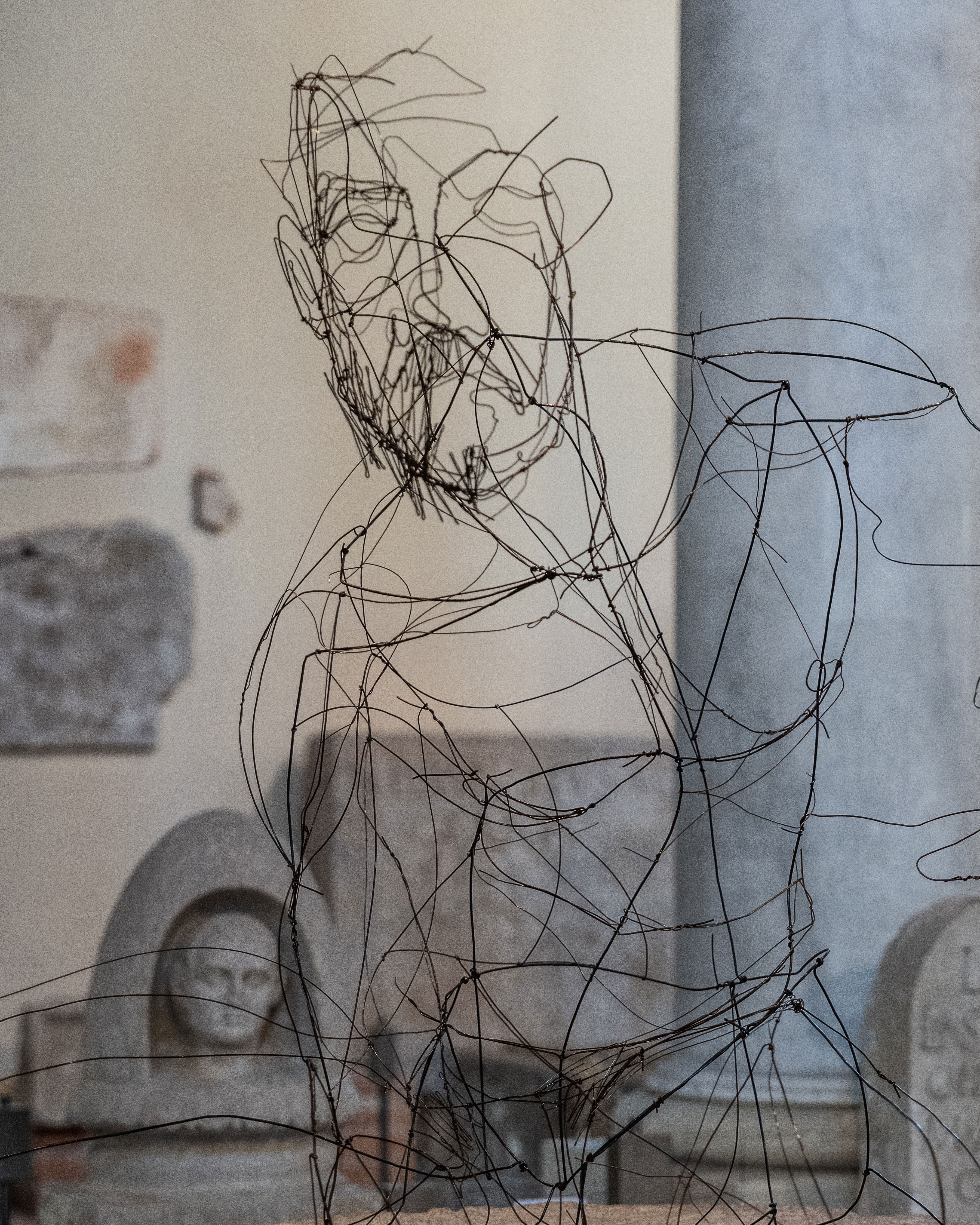
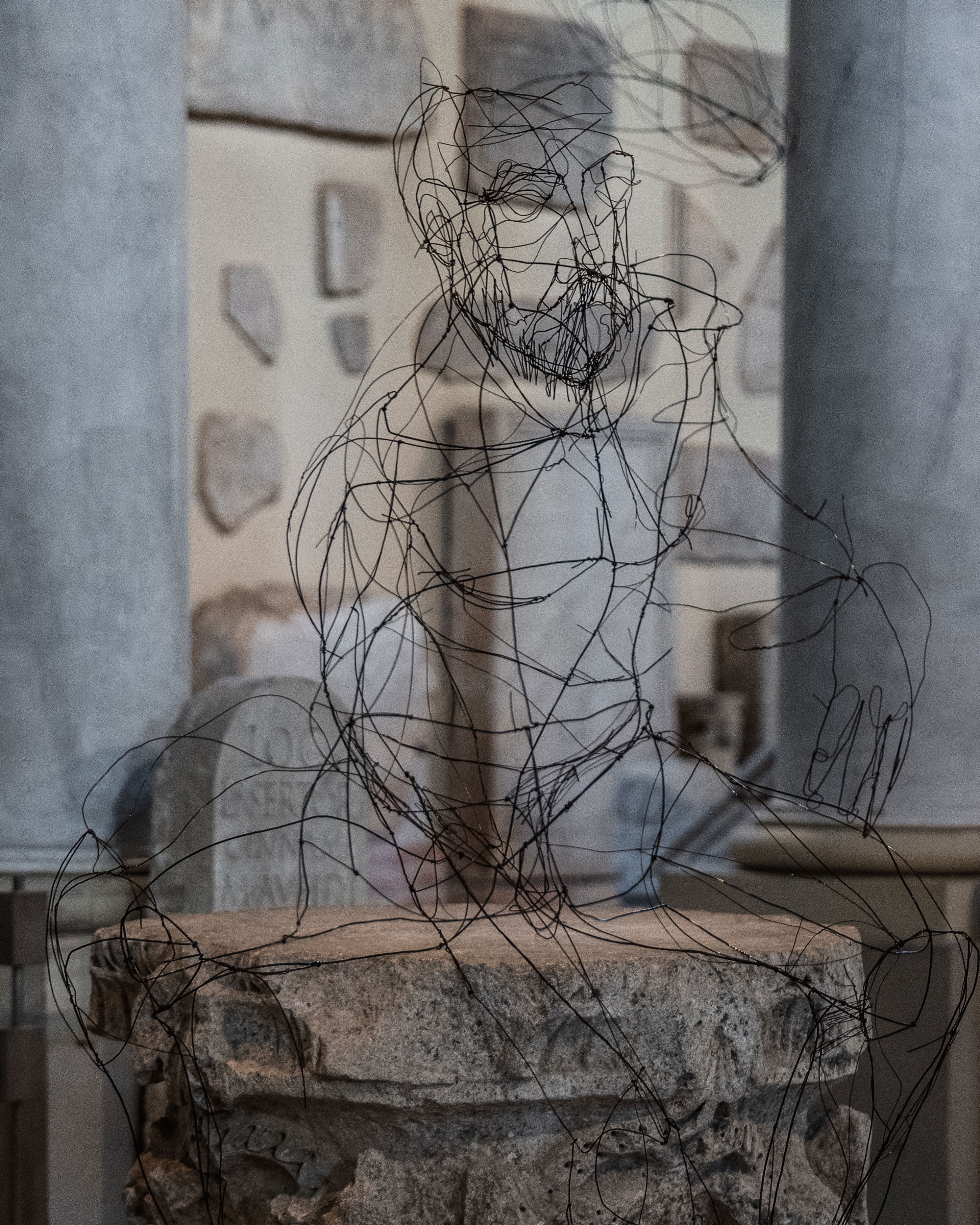
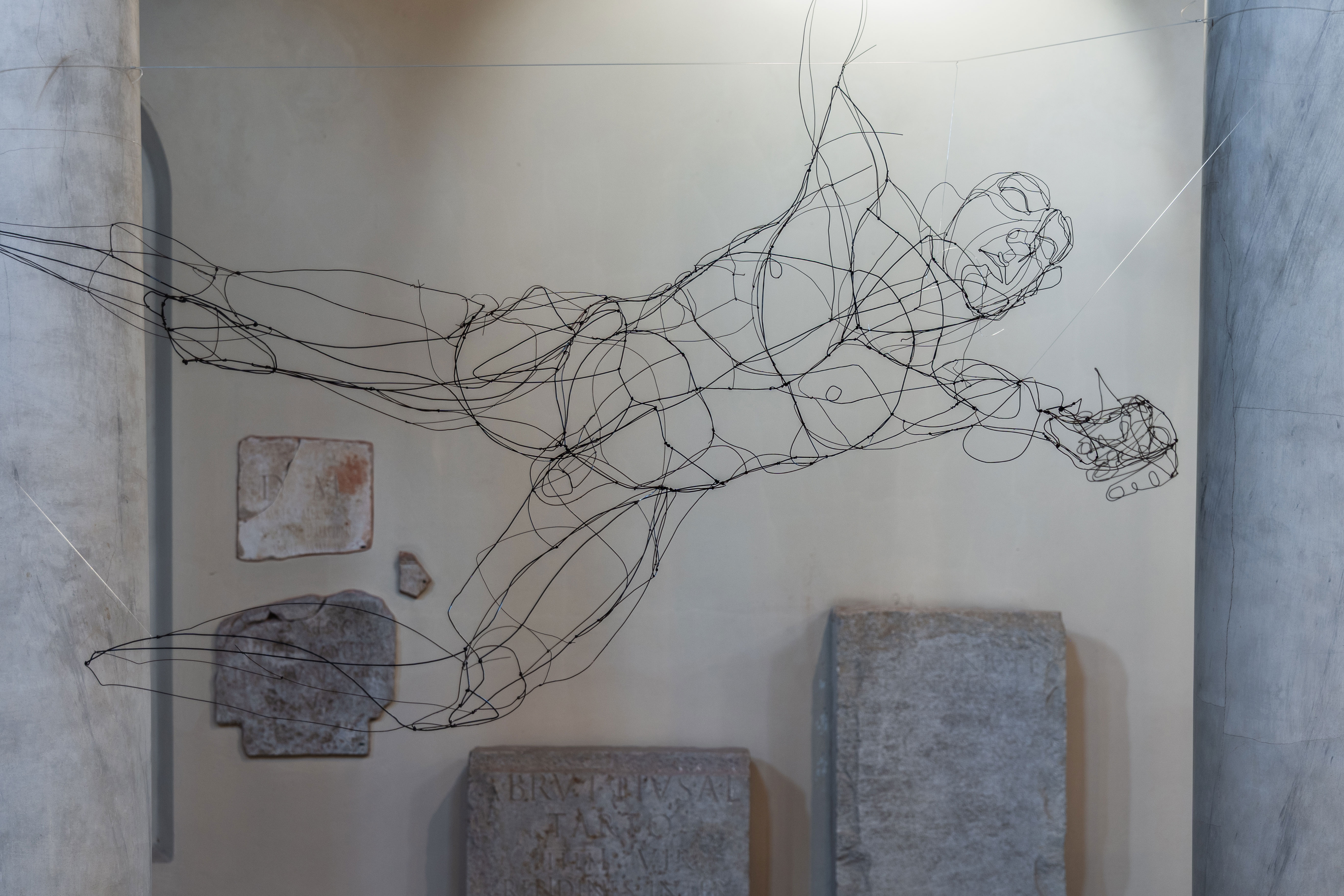
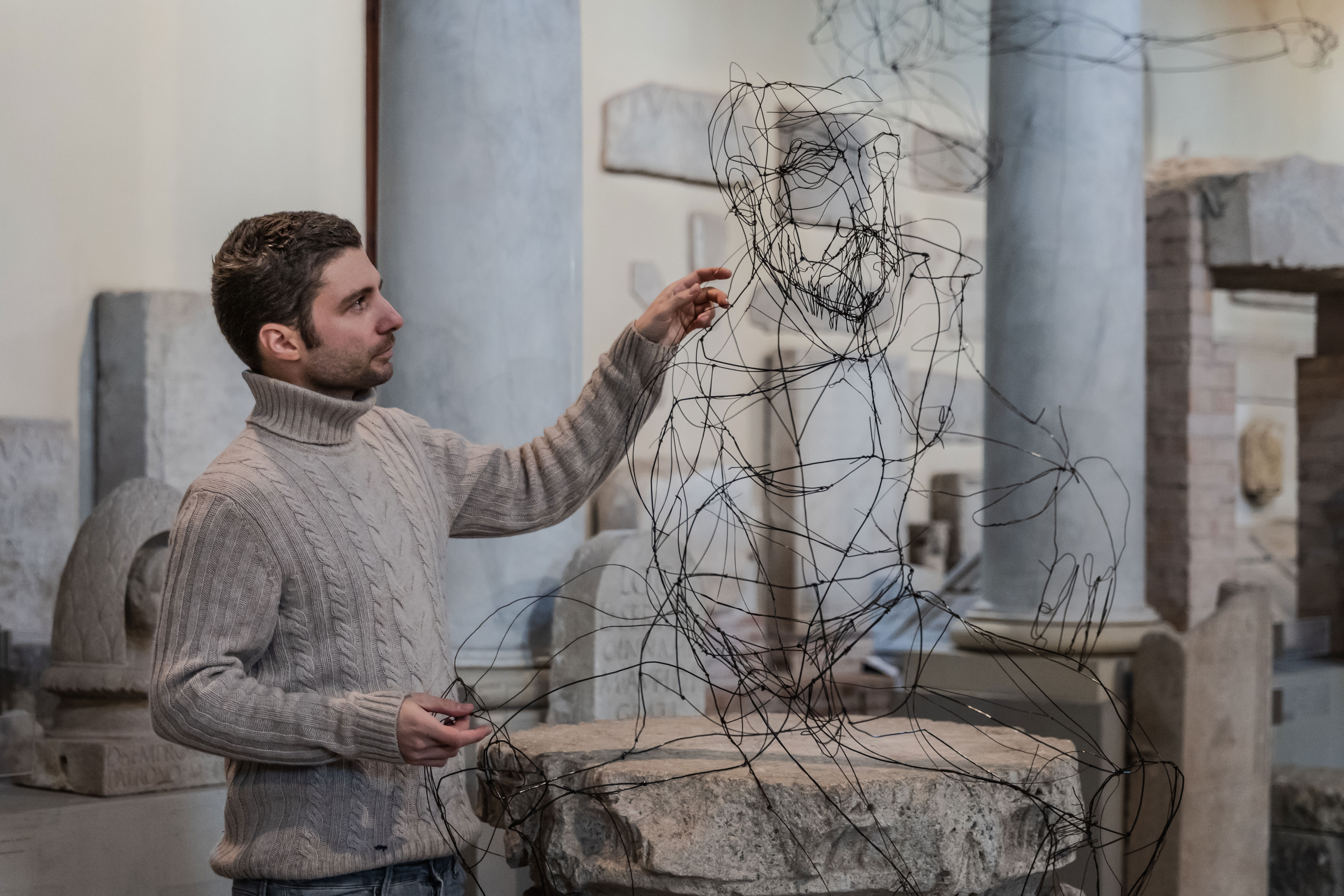
Among layers of silence, in the Portogruaro Museum, Giovanni Pinosio’s wire sculptures mingle with the memory of ancient stones, tracing a suspended map of bodies, signs and visions.


Museo Nazionale Concordiese,
Portogruaro
Among layers of silence, in the Portogruaro Museum, Giovanni Pinosio’s wire sculptures mingle with the memory of ancient stones, tracing a suspended map of bodies, signs and visions.
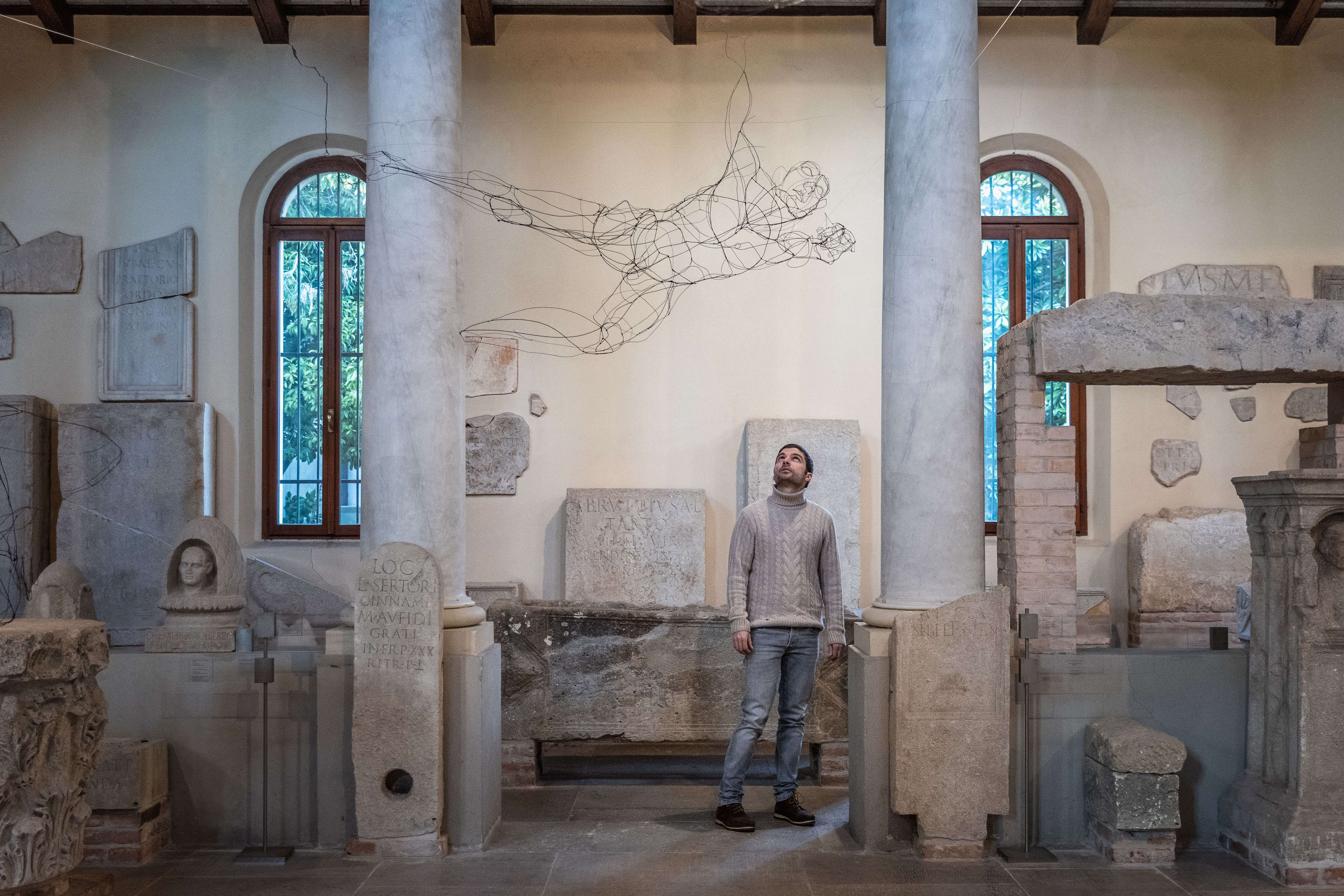
Levitas — a Latin word for physical lightness, but also, originally, instability and changeability — is reinterpreted here in a poetic light: a subtle vibration, a tension between being and becoming, between eros and arché, between form and dissolution. It is the suspended moment of a breath, one that neither holds nor lets go: a live anticipation, an impalpable boundary between inside and outside.
Pinosio’s works emerge from this liminal space. Broken bodies, interrupted anatomies, listening limbs do not intrude; they infiltrate. They evoke rather than describe; they open rather than close.
Wire, at once fragile and resilient, becomes gesture, breath, graphic tension in space: as if a sketch had learned the rhythm of breathing.
The museum itself becomes a porous body, a breathing space where the past converses with the present.
The ancient marble and stone figures become silent interlocutors: they welcome without resisting, follow without dominating. The wire extends from the stone artefacts, reconstructing missing parts before disintegrating and intertwining with Pinosio’s suspended bodies.
Each element breathes in relation to the other, in a visual ecosystem where the void is generative, the unfinishedness is a strength, and lightness is a way of listening. It is not about showing finished sculptures, but about revealing a process: wires, structures and materials become living elements of a poetic construction site, where form reveals itself in the act of becoming. The sculptural act does not close, but opens.
Like Ariadne’s thread stretched across the ages, Pinosio’s work leads us into a labyrinth of breath, intuition, and desire. Each work is a threshold: between the visible and the invisible, between the weight of history and the lightness of vision.
In an age dominated by opacity and excess, these subtle presences invite us to pause, to listen to the body’s breath. Right where form does not intrude, but simply appears – and disappears – in an instant.
Andrea Gorgato